
The Infamous "Taxpayer" Problem
The Government Trick: Dehumanize the Payer, Humanize the Payee

One of the lessons we glean from men going into war is they tend to dehumanize to reduce the internal moral conflict of harming. Soldiers are taught, however informally, to kill the enemy: the Nazis, the Japs or the terrorists, depending on who they are fighting. The Germans invaded Russia in June of 1941 to kick off the Great Patriotic War (Russian perspective). To the Germans, the Russians were the Untermenschen, or “subhumans.” The Russians did not refer to their adversary is “Germans,” they called them фашисты (fascists).
Dehumanization is the propaganda tool that militaries use to get their soldiers, sailors and airmen to not hesitate to kill their enemy. It is easier to do harm to others when we dehumanize. It makes aggressive action towards them much easier.
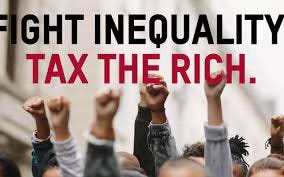
Consider how the media and many politicians, specifically Democrats, treat “the rich.” Politicians rarely say, “we need to take the majority of Michael Bloomberg’s money because he has too much.” It makes more sense to say tax “the rich.” In this way, politicians avoid a potential personal connection between their statements and named individuals. It eases policymaking, because Congress can simply refer to income thresholds, while avoiding blowback from constituents from personalizing Mr. Bloomberg.
The bigger issue is how Congress treats the taxpayer. Promises in this context are often expressed in two forms. First, the taxpayer is referred to by implication. “Free” stuff, from college tuition to New York City bus rides don’t mean actually free. They just mean free for a target audience who will vote for politicians who deliver. The taxpayer apparently has unlimited funds in excess of their own personal bills to pay for the nation’s free and wonderful goods and services.
Moreover, when the government hires incompetent bureaucrats, ideological university administrators or even outright criminals, perpetrators are not expected to pay. No, this falls on the infamous taxpayer. If you hit a parked car, you (via your insurance company) are responsible for the damage. If a state or federal employee hits your car, you pay for the damage, or the taxpayer picks up the tab. The taxpayer, who did nothing wrong, is on the hook for each and every government employee’s negligence.
Conversely, politicians almost always provide personalized attributes to those who benefit from their preferred policies. They are not “welfare recipients”, they are “young working moms with 5 kids.” They are not “college students,” they are “people of color striving to obtain their rightful place in our community.”
Taxpayer, by contrast, is not “single dad with 3 kids,” nor are they “people of color who own businesses.” Taxpayers are simply ignored and remain unmentioned, as their taxes are raised to support the “free.”
One might assume that the term taxpayer is a broad enough to cover all those who pay federal income taxes in the US. However, many Americans do not pay net taxes, nearly half of Americans. Therefore “taxpayers” are simply a subset of people in the US and this group is getting smaller over time as a percentage of population.
Dehumanizing tactics for the “taxpayer” seem like a good idea initially. Preferred groups get special deals and politicians get reelected. The problem with this is, once the free stuff gets prioritized, it is nearly politically impossible to deprioritize free stuff. Eventually, we are all taxpayers even on our deathbed and we will pay the cost from politicians long retired. Reversing dehumanization on the payor side is one small step to bring faces to the checks they write and, potentially forcing politicians to actually hesitate and ask the key question often asked by economists Thomas Sowell, “at what cost.”
This. Every single word.
There’s a poster campaign operating around London that states “Tax Wealth, Not Work” and that message is strong, and as you point out it dehumanises Wealth but we all work.
Governments the world over are all incompetent for the same reason, there’s no consequences for their actions.
The leaders of the BBC resigned after they were shown to have slandered President Trump. They now have their huge pensions and they won’t face prosecution.
https://open.substack.com/pub/agilepmosimply/p/do-change-programmes-consider-the?r=26elou&utm_medium=ios