
The Inconsequential Voter
Lying - Government Style

I was having dinner with 3 new new consultants. Our conversation turned to politics at one point, as these conversations often do. The age difference was clear in some ways in terms of political philosophy, but the consultants were a bit deferential to me as I was their boss. I reassured them that they could speak freely at dinner; they had to be careful at work. I was interested in what they thought about the election coming up and the local race for US Representative in their district. One of the young, but very smart women said, “the problem with an election is that it does not matter what the candidate says. Promises are rarely kept, records are distorted and obfuscation about where they stand on an issue is common.
Our conversation veered to why this is; as well as expanded to include many other government organizations beyond elected politicians. One of the young men on the team encapsulated our night making the observation that when federal government employees lie and manipulate the truth, the government will not hold them accountable. However, when regular people outside of the federal government sphere do the same to the federal government, it becomes a real problem and with real consequences.

The young man had a very astute observation, one that I thought about deeply. The Constitution gives all Americans the right of free speech. People have a broad ability to say what they want and the government may not interfere. Of course, this right is not unlimited. Calls to action for activities that are illegal, most commonly to use violence or to overthrow the government, are banned. This makes sense; you cannot have a civilization with ubiquitous violence.
If we look more broadly about the relationship between the people and its government, we find a dramatic imbalance. Imagine the fancy legal words used by the government when people lie to them, such as perjury. Imagine you are an accountant who earns $75,000 a year in your job. What would happen if, on April 15th, you complete your IRS 1040 form and on the first income line you type $22,000? After applying deductions, you would determine your massive tax refund and sign the form. Interestingly, there is a statement near the signature line that reminds you that you are signing under penalty of perjury. The same word applies to lying on the witness stand in a court during a criminal or civil trial. Lying to prosecutors is also a crime. Making false statements to the police will land you in hot water. Imagine testifying in front of the Senate or House Judiciary Committee and telling a lie - they would refer you to the Department of Justice for prosecution. The Federal Trade Commission polices commercial speech such as product or services advertising.
Based on the evidence, it is clear that the government objects to lying. Governance processes only work when true information flows to decision makers. They will make decisions or, at least, take positions based on information that accurately reflect the real world. Inaccurate information causes distorted decisions, therefore the government puts significant disincentives in place for lying.
As we look at the evidence from the government, it is clear they have established that communicating truth is a bedrock component of a civilized society. However, government employees themselves construct lies to the American public routinely, specifically politicians. Each and every political campaign, irrespective of political party, has lies woven through the rhetoric. Intentionally false promises, lies about a candidates voting record, manipulated misinformation about another candidate’s record all fit within the purview of “free speech” from a legal perspective. Translated, government employees have the right to lie to you.
It is a strange analysis, indeed. Unpacking this complex world of lying, I’ve come to this: it is legally wrong for citizens to lie to government, but it is legal for government to lie to citizens. The government, specifically the courts, have gone to great lengths of legal gymnastics that reaffirm my premise. There are various exceptions to free speech rights, individually that make sense, but taken as a whole allows campaigns of government misinformation and outright fraud.
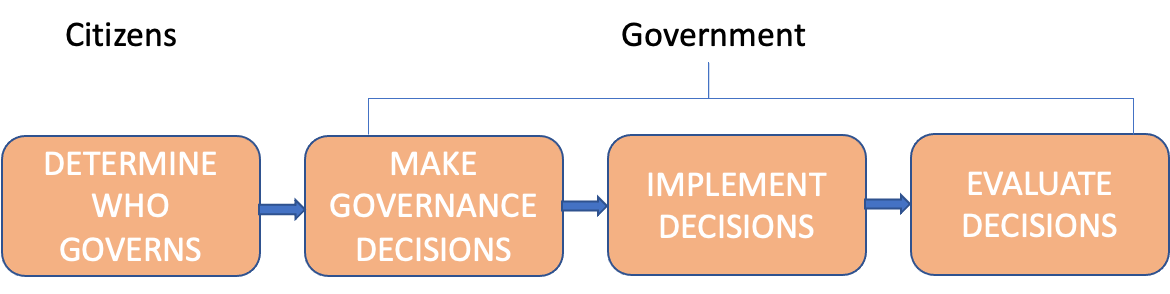
The basis of perjury and similar rules that provide disincentives for lying to government are based in the idea that lying obstructs the government’s ability to make decisions on information that reflects reality. This is a reasonable assertion. Government decision makers need reliable information that get filtered through their values to make decisions for the country.
The incongruence comes when we apply the same standard to voters. When politicians (and in some cases other government employees) lie or misinform voters, they are obstructing the very decisions that are key in our republic: namely the people and inherent values we want to run our government. In essence, the Supreme Court’s perspective is that, while the IRS has a job to do and, therefore we need to be truthful to not obstruct it, the same standard never applies to voters. This can only be because one of two reasons: either the Supreme Court sees voting as non-essential process in governance or it simply favors its federal government employer to us poor schmoes. While I absolutely believe the second is true, the first reason is a much bigger threat. Why would the Court artificially draw a line for lying and misinformation in the governance process (below)? You decide.
A Solution
A potential solution to this problem would be to require all politicians to be held “under oath” consistently during the entirety of their employment. Of course, politicians would be able to express opinions and attempt to make future predictions without recourse because that is part of the free speech essence. However, they should be required to speak truthfully when making fact-based statements (those that can be verified as historically true or false). Citizens should be able to sue politicians who make false statements and force them to defend their comments in court, under the cloud of monetary damages, whether fixed in the law or determined by a court. Also, damages cannot be paid from campaign funds because those monies are from others. They must be paid by the politician’s personal assets; politicians must be held personally financially liable for lies.
Why should politicians be held accountable for speech? There are exceptions that they themselves created. In the Uniform Code of Military Justice, Article 88 reduces the free speech of our military, specifically to protect politicians. While it seems odd to me that there is not a similar measure preventing politicians from bad mouthing specific military personnel, it is an exception that politicians created to limit speech. The benefits of limiting free speech for bonafide politicians outweigh the costs. Voting is not as insignificant as the courts, Congress and legislatures believe. It is an important piece of governance because voters set the values of the state.
Please comment, I am interested in your feedback so I can continue to improve my content. Your participate in the discussion is paramount to improving our country.
They used to tar and Feather congressmen that lied.
Duels were fought over the truth.
I like it. Consequences for the misconduct would be most helpful. The problem will be getting any lawmakers to make laws that apply to them. Have you seen how well the no insider trading rule is being enforced?